Choosing wood for furniture, flooring, cabinets, or interior finishes often sounds simple until the labels begin to blur. Solid oak, plywood, veneer, MDF, particleboard, engineered timber—the options can feel more technical than expected. At the center of many buying decisions is one basic comparison: engineered wood vs solid wood.
Both materials can look attractive and perform well, but they are made differently and respond differently to moisture, weight, wear, and changing temperatures. One is not automatically better than the other. The right choice depends on where the material will be used, how long it needs to last, how much maintenance is realistic, and what kind of appearance matters most.
Understanding the differences makes it easier to look beyond surface finishes and choose a material that genuinely suits the room and the way it will be used.
What Solid Wood Really Means
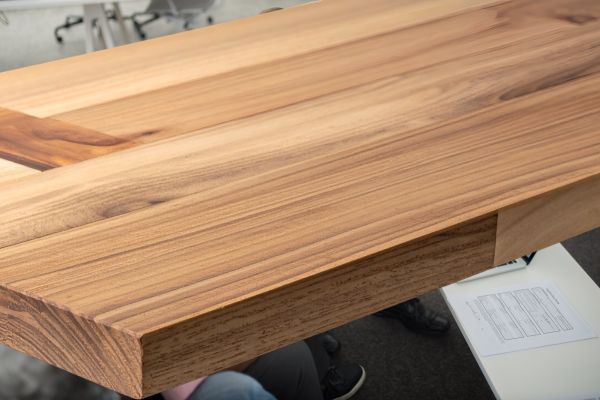
Solid wood is cut directly from natural timber. A solid wood table, for example, is made from boards of real wood rather than compressed fibers covered with a decorative surface.
Different tree species create very different results. Hardwoods such as oak, walnut, maple, teak, and ash are valued for their strength and distinctive grain. Softer woods, including pine and cedar, tend to be lighter, easier to work with, and often less expensive.
Because solid wood is natural, every piece has its own pattern, color variation, knots, and small imperfections. These differences are part of its character. A dining table may gradually deepen in color, collect tiny marks, and develop a worn-in look that feels more personal with age.
Solid wood is often associated with quality, but quality still depends on construction. A poorly joined solid wood cabinet may not last as long as a carefully built engineered wood one. The material matters, but design, craftsmanship, finish, and maintenance matter too.
How Engineered Wood Is Made
Engineered wood is created by combining wood fibers, particles, veneers, strands, or thin layers using adhesives, pressure, and heat. The term covers several materials rather than one single product.
Plywood is made by gluing thin sheets of wood together in alternating directions. This cross-layered structure gives it strength and helps reduce movement. MDF, or medium-density fiberboard, is made from fine wood fibers compressed into smooth, uniform panels. Particleboard uses larger wood particles and is commonly found in affordable flat-pack furniture. Engineered flooring usually has a real hardwood top layer attached to a stable layered core.
Some engineered wood products contain visible natural wood, while others use printed laminates, melamine, paint, or veneer to create the final surface. As a result, appearance and performance can vary widely.
This is important when comparing engineered wood vs solid wood. A high-quality plywood cabinet with a genuine wood veneer is very different from a low-density particleboard shelf, even though both may be described as engineered wood.
Appearance and Natural Character
Solid wood has a depth and variation that is difficult to reproduce perfectly. The grain continues through the material, edges can be shaped or carved, and scratches may reveal more wood rather than a different core underneath.
For people who enjoy natural texture, subtle color changes, and visible grain, solid wood often feels warmer and more authentic. It also tends to age in a recognizable way. Sunlight, polishing, and daily use may gradually alter its tone, but many homeowners see this as part of its appeal.
Engineered wood can still look convincing, especially when finished with a real wood veneer. A thin layer of oak, walnut, or another species can provide the appearance of natural timber while the core improves stability and reduces cost.
Laminate finishes offer even greater consistency. Every cabinet door can have the same shade and pattern, which is useful in modern interiors where a clean, uniform appearance is preferred. However, lower-quality printed surfaces may look repetitive or artificial when viewed closely.
The visual winner depends on taste. Solid wood offers individuality, while engineered materials often offer control and consistency.
Strength, Stability, and Everyday Performance
Solid wood can be extremely strong, particularly when dense hardwoods are used. It performs well in tables, chairs, bed frames, doors, and other items that must carry weight or withstand repeated use.
However, natural wood expands and contracts as humidity changes. If it absorbs moisture, it may swell. In dry conditions, it can shrink or crack. Wide solid wood panels may warp if they are not properly dried, sealed, and constructed.
Engineered wood is designed to reduce some of this natural movement. Plywood, for instance, has layers arranged in different directions, making it more dimensionally stable than a single wide wood board. This is one reason it is frequently used in kitchens, wardrobes, flooring, and built-in cabinetry.
MDF remains flat and smooth, making it suitable for painted doors and decorative panels. It does not have natural grain, so paint can be applied evenly without knots showing through. Still, MDF is heavy, and its edges can be vulnerable if screws are repeatedly removed and reinserted.
Particleboard is generally less durable than plywood or solid timber. It can sag under heavy loads and may crumble around damaged fasteners. The type and grade of engineered wood therefore matter as much as the broader category.
Moisture Resistance and Humid Environments
Moisture is one of the most important factors in the engineered wood vs solid wood debate.
Solid wood can tolerate occasional contact with moisture when properly sealed, but prolonged dampness may cause swelling, staining, mold, or warping. In bathrooms, kitchens, basements, and humid climates, maintenance becomes especially important.
Engineered materials vary considerably. Exterior-grade or moisture-resistant plywood may perform well in demanding areas. Engineered hardwood flooring is often more stable than solid wood flooring when installed over concrete or in spaces with mild humidity changes.
MDF and standard particleboard are more vulnerable. Once water enters an unsealed edge, the panel can swell and lose its original shape. Unlike solid wood, which may sometimes be sanded and repaired after minor damage, badly swollen fiberboard is usually difficult to restore.
No wood-based product is completely immune to water. Good sealing, correct installation, ventilation, and quick cleanup remain essential regardless of material.
Repair, Refinishing, and Long-Term Use
One of solid wood’s greatest strengths is its repair potential. Scratches, stains, and worn finishes can often be sanded away. A well-made table or chest may be refinished several times over its life, allowing it to adapt to changing tastes.
Joinery can also be repaired. Loose chair joints may be reglued, damaged surfaces can be filled, and solid edges can often withstand years of handling.
Engineered wood is less predictable. Plywood with a thick veneer may allow light sanding, but aggressive refinishing can wear through the top layer. Engineered flooring can sometimes be refinished once or twice, depending on the thickness of its real wood surface.
Laminate, MDF, and particleboard surfaces are more limited. Small chips may be disguised, but deep damage often exposes the core. Once that happens, a seamless repair can be difficult.
For furniture intended to remain in a family for decades, solid wood usually offers more restoration possibilities. For shorter-term use or areas likely to be redesigned, engineered wood may provide enough durability without the higher initial cost.
Cost and Value Over Time
Solid wood generally costs more because natural timber must be grown, harvested, dried, selected, cut, and crafted. Rare species, wide boards, detailed joinery, and handmade construction raise the price further.
Engineered wood makes more efficient use of wood resources. Small fibers, thin veneers, and lower-grade timber can be turned into stable panels. This usually makes furniture and cabinetry more affordable.
Initial price, however, does not tell the whole story. An inexpensive particleboard bookcase that needs replacement after a few years may offer less long-term value than a solid wood one that lasts for decades. On the other hand, buying expensive hardwood for a temporary rental, children’s room, or rarely used storage area may not be necessary.
Value depends on the expected lifespan, the possibility of repair, and how heavily the item will be used.
Environmental Considerations
The environmental picture is not completely straightforward. Solid wood can be renewable when it comes from responsibly managed forests. It is also biodegradable and may last for generations, reducing the need for replacement.
Engineered wood can reduce waste by using smaller pieces, fibers, and by-products that might otherwise be discarded. Plywood and veneer also allow manufacturers to cover more surface area with less valuable hardwood.
The adhesives and resins used in some engineered products can affect indoor air quality and make recycling more difficult. Emission standards have improved in many markets, but it is still sensible to check product certifications, especially for furniture used in bedrooms or children’s spaces.
Durability should also be part of the environmental calculation. A material that lasts longer and can be repaired may have a lower impact than one that must be replaced frequently.
Choosing the Right Material for the Room
Solid wood is often a strong choice for dining tables, chairs, bed frames, heirloom furniture, and visible pieces where natural grain and long-term repairability matter.
Plywood works particularly well for kitchen cabinets, built-in storage, wardrobes, and furniture that needs strength without excessive weight. MDF is useful for painted cabinet doors, wall panels, shelving, and detailed decorative profiles. Engineered hardwood flooring may suit homes that want a genuine wood surface with greater dimensional stability.
The best approach is often to combine materials. A cabinet might have a plywood structure, solid wood frame, and veneered doors. A table could use a solid wood top with engineered components in less visible areas.
Mixed construction is not necessarily a compromise. When done thoughtfully, it allows each material to perform where it works best.
Making a Choice That Fits Real Life
The engineered wood vs solid wood decision is not simply about choosing natural over manufactured or expensive over affordable. It is about matching the material to the purpose.
Solid wood offers natural beauty, repairability, strength, and the possibility of lasting for generations. Engineered wood offers stability, consistency, design flexibility, and accessible pricing. Within both categories, quality can range from excellent to disappointing.
Before choosing, consider moisture, daily wear, weight, maintenance, budget, and expected lifespan. Look closely at how the piece is constructed, not just how the surface appears.
A thoughtful choice will not always be the most expensive one. It will be the material that feels right in the room, performs reliably, and continues to make sense long after the first impression has faded.