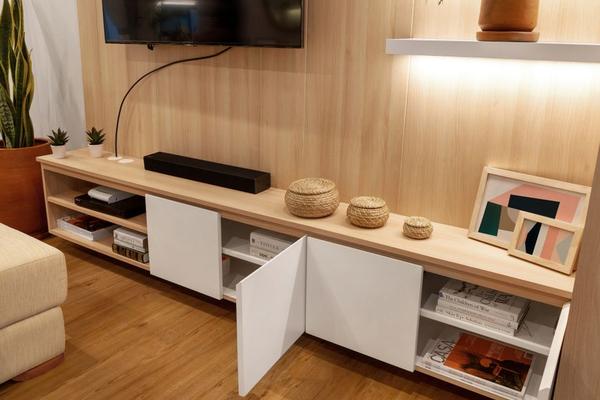
A floating TV stand can make a room feel noticeably lighter. By lifting storage off the floor, it exposes more flooring and gives a media wall a built-in look. But the choice is not purely cosmetic. Before committing to a floating media console, you need to know what is behind the wall, how much weight the unit will carry and whether you are comfortable making the installation permanent.
That is where the floating TV stand pros and cons become practical. A unit that looks effortless once installed may still require careful measuring, suitable fixings and a wall structure capable of supporting it. The right setup can be excellent; rushed installation can create an avoidable repair job.
The biggest advantage is the visual space it creates
A wall mounted tv console leaves the floor visible underneath, which can make a compact living room appear more open. The effect is especially useful in narrow rooms where heavy furniture can visually crowd the space. You can also choose a height that creates a more intentional relationship between the TV, console and surrounding wall.
Extra clearance can make cleaning and robot-vacuum access easier. There are no legs to work around and fewer awkward floor-level corners where dust collects.
A clean look still depends on cable planning
A floating stand only looks minimal if cables are handled properly. Power leads, HDMI cables and device cords hanging below the cabinet can undermine the effect. Before installation, check where sockets are located and whether the console provides rear openings for cables. If the television is also wall mounted, plan both cable routes together.
Wall strength deserves the most attention
The main disadvantage is that the wall becomes part of the furniture system. A floor-standing console transfers most of its weight to the floor. A floating tv unit transfers its load through brackets, rails, screws or other fixings into the wall structure.
There is no universal answer to how much weight a floating console can hold. Manufacturers may state a maximum load for the furniture, but a wall-hung installation also depends on wall material, mounting hardware and the fixings used. Some manufacturers state that wall-hung load capacity can vary with wall construction and advise using suitable screws and plugs.
Drywall needs careful planning
If you have drywall or plasterboard, do not assume any convenient position is suitable simply because the TV is mounted elsewhere. Consoles can become surprisingly heavy once loaded with game systems, amplifiers, books and accessories. Follow the specific product instructions and use a mounting method appropriate for the structure behind the wall.
Brick, block and concrete also require compatible fixings. If you are uncertain about what the wall contains or which hardware is appropriate, professional installation is a sensible option.
Test the position before you drill
Imagine a 180 cm floating media console beneath a wall-mounted television. The centre point may look right on a sketch, but once you mark the full outline, you might discover that a socket sits behind a drawer, the lower edge blocks a robot vacuum or the top feels too close to the TV.
Use low-tack painter’s tape to mark the console’s full width and height on the wall. Then sit in your normal viewing positions, open nearby doors and walk through the room. This simple mock-up can reveal proportion and clearance problems before the first hole is drilled.
Storage is tidy, but future changes are harder
A floating media console can hide streaming boxes, routers, remotes and gaming accessories while keeping the room visually calm. Closed storage is useful when you want the television wall to feel like part of the interior rather than an equipment station.
The trade-off is flexibility. If you later buy a much larger television, rearrange the room or change equipment, the original mounting height may no longer work. A floor console can be shifted in minutes. A floating unit usually means removing fixings and repairing holes before repositioning it.
It can look space-saving without being shallow
Floating furniture exposes more floor, which makes a room feel larger, but the cabinet still projects into the room. A deep console can be intrusive in a narrow walkway. Measure depth as carefully as width, especially in compact rooms.
Natural follow-up reading could include choosing the right TV stand size, TV wall cable management and mounting a TV stand safely. Those topics help solve the practical decisions that come before installation.
Installation precision matters
A floor-standing cabinet can tolerate a small measuring error. A floating unit makes misalignment obvious. If the cabinet is not level, doors may appear uneven and the whole media wall can feel off-centre.
Check the installation manual before drilling, identify the exact mounting points, measure twice and use a level across the mounting rail or bracket. If several modules will be joined, small errors can multiply across the full width.
When a floating TV stand makes sense
It is a strong choice when you want a clean modern look, have a suitable wall, value easy floor cleaning and are unlikely to rearrange the media setup frequently. It works well when the TV wall is meant to feel architectural rather than furnished.
When a regular console may be better
A floor-standing stand may suit you better if you rent, move furniture often, are uncertain about the wall construction or frequently change large AV equipment. It is also simpler when you want substantial storage without adding mounting complexity.
FAQ
Are floating TV stands safe?
They can be safe when installed according to the manufacturer’s instructions with fixings suited to the wall and expected load. The cabinet, hardware, wall construction and contents all matter, so one mounting method should not be assumed to work everywhere.
Can you mount a floating TV stand on drywall?
It may be possible, depending on the product, wall structure and approved mounting method. Follow the console’s instructions and use a fixing strategy appropriate for the wall rather than choosing generic anchors without checking the requirements.
How high should a floating TV stand be?
There is no single correct height. Consider the TV position, console height, cable locations, seating sightlines and the clearance you want underneath. Taping the outline on the wall before drilling is an easy way to judge proportions.
Is a floating TV stand better than a regular one?
Neither is universally better. Floating models offer a cleaner appearance and easier floor access, while regular stands are easier to move, simpler to install and less dependent on wall structure. The better choice depends on your room and how permanent you want the setup to be.
Final thoughts
A floating TV stand looks lighter, keeps the floor clear and can make a television wall feel cohesive. Its biggest weakness is equally clear. Installation is not an afterthought; it determines whether the console works safely and looks right.
Before buying, check the mounting instructions, estimate the real weight of what you plan to store, identify the wall construction and confirm that cables and sockets will work with the chosen height. If those pieces line up, a floating console can be a polished upgrade. If the wall or layout is uncertain, a floor-standing alternative may save effort and future repairs.