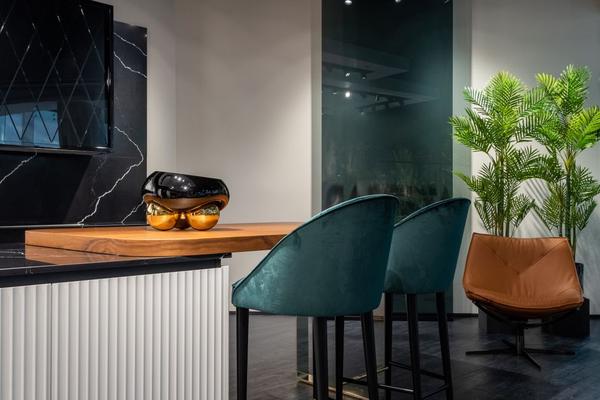
Velvet has a way of making an ordinary chair feel intentional. Its soft pile catches light differently throughout the day, giving color more depth than many flat-woven fabrics. That is a big reason the velvet accent chair trend has remained visible even as other decor trends have changed. In 2026, the look feels less about formal glamour and more about using one tactile, saturated piece to add personality to a living room.
A velvet chair now works comfortably beside an oak coffee table, a woven rug, or a clean-lined sofa. Rich greens, blues, burgundies, aubergines, and warm ochres are especially effective because velvet gives these shades a softly reflective finish without making them look glossy.
Why Velvet Accent Chairs Still Feel Current
Velvet fits several decorating ideas that remain popular: tactile materials, deeper color, sculptural furniture, and rooms that feel collected rather than perfectly matched. Recent interiors have also renewed interest in Art Deco references and layered textures. A velvet chair can tap into those directions without requiring a full room makeover.
Unlike a large velvet sofa, an accent chair is a manageable commitment. It introduces color and softness in one piece, so homeowners can experiment with a stronger shade without letting it dominate the room. That makes a jewel tone accent chair particularly useful in neutral spaces where beige, cream, gray, or warm white needs a focal point.
From Formal Glamour to Relaxed Luxury
Velvet once carried strong associations with tufting, dark wood, and formal sitting rooms. The current version is easier to live with. Simple silhouettes, curved backs, compact swivel chairs, and lighter-looking frames make the fabric feel modern rather than ceremonial.
This is where luxe living room decor has changed most. Luxury no longer has to mean matching furniture sets or glossy finishes. A velvet chair beside a linen sofa can create more richness than several similarly finished pieces because the contrast makes both materials more noticeable.
Use Texture to Keep Velvet Grounded
If you are worried that velvet will feel too dressed up, pair it with quieter materials. Wood, jute, wool, linen, matte ceramics, and aged metals all help balance velvet’s softness. Let the chair be the main plush surface instead of repeating velvet everywhere.
For example, imagine a living room with a cream sofa, medium-tone oak flooring, and a natural woven rug. Add a forest-green velvet chair near the rug, place a small dark wood side table beside it, and repeat the green only once through artwork or a cushion. The chair becomes a deliberate focal point without turning the whole room into a jewel-box scheme.
Which Velvet Colors Work Best?
Jewel tones remain the obvious choice because velvet intensifies color beautifully. Emerald and teal create strong contrast against warm neutrals. Sapphire and navy feel calmer and are easy to combine with existing furniture. Burgundy and plum bring warmth, especially in rooms with walnut, brass, or brown leather. Mustard and ochre offer similar richness with a more earthy mood.
If your room already contains several strong colors, a softer velvet chair may work better. Dusty rose, olive, mushroom, or muted blue can add texture without competing for attention. The goal is not to choose the boldest chair available; it is to choose a color that has a clear relationship with the room.
Match Undertones Rather Than Exact Shades
A useful shortcut is to compare undertones instead of trying to match colors exactly. A blue-green velvet chair can sit comfortably with warm cream, walnut, terracotta, and antique brass because the surrounding warmth creates balance. A cool gray room, meanwhile, may benefit from a warmer plum or rust chair to prevent the scheme from feeling one-note.
For more color-planning ideas, living room color combinations would be a natural related topic. For layout decisions, accent chair placement ideas can help determine whether the chair should face the sofa, angle toward a coffee table, or create a separate reading corner.
How to Style Velvet Without Overdoing It
The easiest mistake is repeating the same sense of richness everywhere. A velvet chair, velvet cushions, metallic tables, glossy lamps, and dramatic wallpaper can quickly make a small room feel staged. A more current approach is to give the chair one or two supporting details and keep the rest quieter.
Start with shape and scale. A rounded barrel chair looks good against straighter furniture because the curve creates contrast. A high-backed velvet chair can anchor an empty corner, while a smaller armless design works where circulation space is limited. Leave enough breathing room around the chair so it reads as a feature rather than an obstacle.
Then repeat either the chair’s color or its mood, but not necessarily both. You might echo a green velvet chair in botanical artwork while keeping the cushions neutral. Or repeat its luxurious feel through a brass lamp while choosing a different color elsewhere.
Is Velvet Practical for Everyday Living?
That depends on the fabric and how the chair will be used. Upholstery velvet is generally more appropriate for furniture than lightweight decorative velvet, while performance versions may offer better resistance to stains and wear. Before buying, check the manufacturer’s care instructions and whether the fabric is recommended for regular upholstery use.
Velvet can show pressure marks, shading, lint, and changes in the direction of the pile. Those are often part of the material’s character rather than defects. A suitable soft upholstery brush or vacuum attachment can help with routine dust, while spills should be treated according to the specific fabric’s care guidance.
If you are comparing proportions and materials before buying, how to choose an accent chair is another useful topic to explore.
FAQ
Are velvet accent chairs still in style in 2026?
Yes. Velvet continues to appear in contemporary interiors, especially alongside richer colors, sculptural furniture, and updated Art Deco influences. The fresher approach is to use it as one textured element rather than making the entire room feel formal.
What color velvet chair is easiest to decorate with?
Deep green, navy, muted teal, and warm rust are versatile because they work with many common neutrals and wood tones. The best option depends on the undertones already present in your walls, sofa, flooring, and rug.
Does a velvet chair make a room look too formal?
Not necessarily. Pairing velvet with linen, wool, wood, or woven textures keeps the room relaxed. Simple chair shapes also feel more casual than heavily tufted or ornate designs.
Can a velvet accent chair work in a small living room?
Yes. Choose a compact silhouette and avoid oversized arms or an excessively deep seat. One colorful chair can provide both seating and a focal point, reducing the need for several smaller decorative pieces.
A Trend With Staying Power
The appeal of a velvet chair goes beyond one decorating season. It combines color, texture, comfort, and visual depth in a relatively small piece of furniture, making it easy to adapt as surrounding styles change. The most convincing rooms use velvet with restraint: one strong chair, a balanced palette, and enough contrasting texture to keep the space relaxed. That approach lets the velvet accent chair trend feel expressive and current without tipping into overly formal decor.