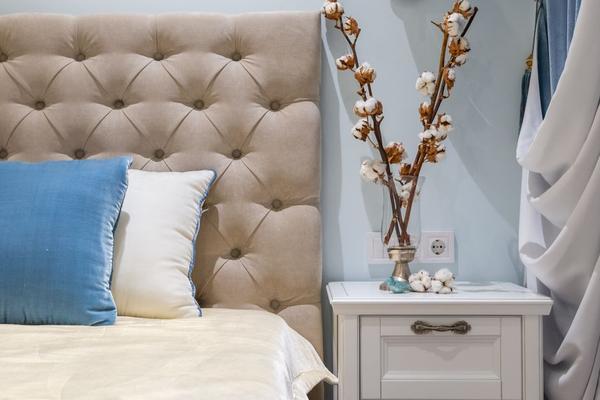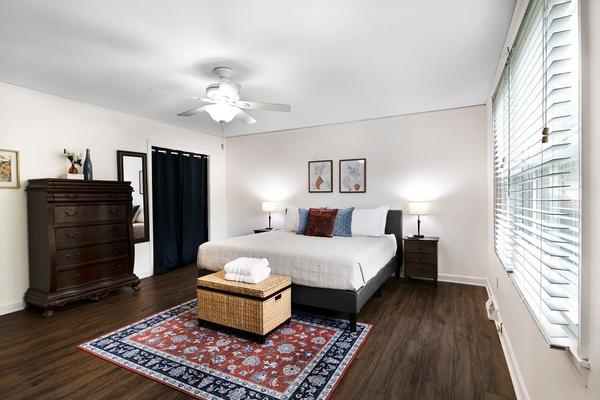
A wood headboard can make a bedroom feel warmer without filling it with extra furniture. The secret is choosing a design that suits the room’s proportions, light, and existing finishes. A honey-colored oak headboard brings a different mood from dark walnut, while narrow slats feel lighter than a substantial solid panel. These wood headboard ideas focus on how each option looks and lives in a bedroom, so you can find a style that feels natural rather than overly coordinated.
Start With the Wood Tone, Not the Headboard Shape
Before comparing shapes, look at your floor, bedside tables, and the daylight the bedroom receives. Wood tones can lean golden, reddish, gray, or neutral. They do not have to match exactly, but their undertones should feel comfortable together.
In a room with pale oak flooring, try a headboard in a similar light family for a quiet look. A medium walnut headboard can also work as deliberate contrast, especially with cream bedding and warm white walls. If the flooring has an orange cast, a strongly graywashed headboard may look disconnected.
Check samples in morning and evening light. A stain that looks warm in a showroom can appear much darker under a bedside lamp. Consider bedroom color combinations before committing to a finish.
Wooden Headboard Ideas for Different Bedroom Styles
A Relaxed Rustic Plank Headboard
Broad horizontal planks with visible knots introduce character to an understated bedroom. Choose a matte, smoothly finished surface rather than aggressively distressed boards if you want rustic warmth without the reclaimed-barn aesthetic. Pair it with linen bedding, woven textures, and simple bedside lighting. Reclaimed wood should be cleaned, checked for old coatings and fasteners, and finished for indoor use.
A Modern Vertical Slatted Headboard
A slatted headboard gives the wall rhythm while keeping the silhouette crisp. Thin vertical slats can make a low ceiling feel taller; wider spacing and a dark backing create a stronger pattern. Light oak slats look especially good against off-white or muted sage walls. Avoid gaps that catch pillows or make cleaning awkward, and check that the edges are comfortable to touch.
A Classic Framed Panel Headboard
A panel headboard with a modest raised or recessed center has a timeless look. Painted wood, natural cherry, and walnut all suit this form. For a traditional bedroom that does not feel formal, choose a simple rectangular frame rather than heavy carving. Repeat the headboard’s color in a smaller detail, such as a picture frame, instead of buying an entire matching furniture set.
A Breezy Coastal Wood Headboard
Coastal style works best when it suggests sun and air rather than beach-themed decorations. Look for light ash, whitewashed oak, or a gently weathered finish that lets the grain show. A low-profile horizontal design pairs nicely with cotton bedding, soft blue-gray accents, and natural-fiber baskets. Keep the finish subtle; heavy white distressing can make the room feel staged.
A Curved Headboard for a Softer Bedroom
An arched top, rounded corners, or a shallow scalloped outline softens the hard lines of a bed frame. This is useful in a bedroom already filled with square cabinetry. Curved wooden headboard ideas range from contemporary bentwood forms to simple traditional arches. Choose one expressive curve and keep surrounding furniture straightforward.
Get the Height and Width Right
A headboard should relate to the bed and the wall behind it. A tall design can anchor a spacious room, while a compact one is often better beneath a low window or sloping ceiling. Measure the visible height above your mattress, not just the product’s total height, because pillows and thick mattresses can conceal much of the design.
For a practical test, tape the proposed headboard outline onto the wall with painter’s tape. Sit on the bed, stack your usual pillows, and view the shape from the doorway. If the outline disappears behind cushions, consider a taller model. If it crowds artwork or wall lights, reduce its height or choose an open slatted design.
A headboard the width of the mattress creates a tailored appearance. A wider, wall-mounted piece can visually include bedside tables and make the sleeping area more architectural. With an oversized design, confirm that outlets, switches, and lamps remain accessible.
Choose a Finish That Fits Daily Life
Natural-looking does not necessarily mean unfinished. Bare wood can absorb skin oils and moisture more readily than a suitable protective coating. A water-based clear finish often preserves a lighter appearance, while oil-based finishes may enrich grain and add amber warmth over time. Results vary by species and product, so test a sample first.
Matte and satin finishes generally hide reflections better than high gloss. If you lean against the headboard to read, look for a smooth, sealed surface with rounded edges. Solid wood may expand and contract with seasonal humidity changes; well-constructed veneer over a stable substrate can also suit large flat panels.
Dust with a soft cloth, following the grain where possible. Use cleaners approved for the finish and wipe away moisture promptly. Harsh abrasives and saturated cloths can damage coatings. Comparing bedroom furniture materials can help you weigh wood against upholstered or metal pieces.
Make the Wood Feel Connected to the Room
The most convincing bedrooms repeat a material without duplicating every piece. A walnut headboard might share its brown tone with a picture frame, while black metal lamps provide contrast. A pale slatted headboard looks grounded beside painted nightstands and a textured rug. Mixing finishes is often more interesting than purchasing a matching suite.
Consider the wall behind the bed, too. A busy woodgrain headboard benefits from a calm paint color; a simple flat panel can hold its own against subtle wallpaper. For small bedrooms, restrained bedding and thoughtful lighting let the grain become the feature. Small bedroom layout ideas can also help determine whether a wall-mounted design saves useful space.
Frequently Asked Questions
What type of wood is best for a headboard?
Oak, walnut, maple, and other furniture-grade woods can all work well. Choose according to appearance, construction quality, finish, and budget rather than assuming one species is universally best. Veneered engineered panels may offer a stable, economical option for broad designs.
Should a wood headboard match the bedside tables?
No. Coordinating undertones matters more than an exact match. A warm oak headboard can look attractive beside cream-painted tables or darker walnut accents, particularly when bedding connects the colors.
Are slatted headboards difficult to clean?
They can take longer to dust because each slat has edges and gaps. Choose accessible spacing, smooth finishes, and a design that does not trap dust behind the bed.
Can you attach a wooden headboard to any bed frame?
Not always. Check mounting-hole spacing, hardware, wall construction, and manufacturer instructions. Freestanding, bed-mounted, and wall-mounted headboards need different attachment methods, and a large solid-wood panel may require substantial support.
A Natural Focal Point That Lasts
The best wood headboard ideas begin with the bedroom you already have. Choose a wood tone that works in your lighting, a silhouette that respects the wall, and a finish that suits your routine. Whether you favor rustic planks, an airy slatted headboard, or a classic panel, thoughtful proportions and complementary textures will give the room inviting, lived-in warmth.