A stack of receipts beside the printer can look harmless until you need a warranty, tax record, or signed contract in a hurry. A filing cabinet for a home office gives paperwork a dedicated home without forcing your desk to become an archive. The best choice is not necessarily the biggest cabinet or the one with the most drawers. It is the model that fits your documents, your room, and the way you actually work.
Start With the Documents, Not the Cabinet
Sort your paperwork into three groups: files you open weekly, records you retrieve a few times a year, and material you can safely recycle or securely shred under your applicable record-retention requirements. Measure the thickness of the files you plan to keep, then allow room for new paperwork. A drawer packed tightly from day one becomes frustrating to use.
Choose Between Vertical and Lateral Filing Cabinets
Vertical cabinets for narrow spaces
A vertical home office file cabinet is relatively narrow, with drawers that extend toward the user. It works well beside a desk or against a short section of wall, especially when you primarily store documents for one person. However, its deeper drawers need generous clearance in front. A narrow body is not a space-saving solution if an open drawer blocks the doorway.
Lateral cabinets for wider walls
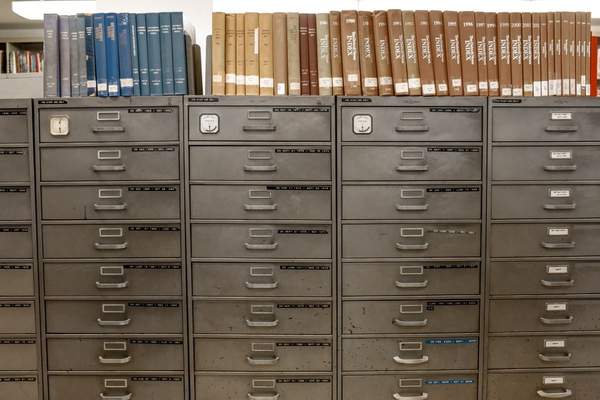
Lateral cabinets are wider and generally shallower. They can make it easier to view folder tabs and organize several categories of records across a drawer. Their tops may also provide a useful surface, provided the manufacturer permits the intended load. They are appealing when you have available wall width but limited depth.
Measure the Full Working Footprint
Record the cabinet’s width, depth, and height, then check the manufacturer’s specifications for how far the drawer opens. Add enough clear space to stand comfortably in front of it. Also check nearby chair movement, baseboards, electrical outlets, and the swing of a room door.
For example, imagine a cabinet beside a desk in a small spare bedroom. The cabinet fits neatly against the wall, but a fully extended bottom drawer overlaps the desk chair’s usual position. Mark the proposed cabinet outline and drawer extension on the floor with removable painter’s tape before ordering. Sit at the desk and test the route to the door. This simple trial reveals problems a product photograph cannot.
If you plan to tuck a mobile unit under a desk, measure the underside clearance and account for casters, handles, and your knees. Leave enough space to move the cabinet out when you need to open a drawer.
Check File Sizes and Drawer Capacity
Check compatibility with your actual folders. In the United States, letter paper measures 8.5 by 11 inches and legal paper measures 8.5 by 14 inches. A4 is approximately 8.27 by 11.69 inches. A file drawer advertised for letter-size hanging folders may not support legal-size folders, and international formats are not always interchangeable.
Look for adjustable hanging rails if you keep mixed sizes. Confirm whether rails are supplied or sold separately, and whether folders hang front-to-back or side-to-side. A roomy-looking drawer may have less usable space once rails and hardware are installed.
Two drawers often suit a household with modest paperwork: one for active files and one for longer-term records. Three or four drawers may make sense for a home-based business, multiple family members, or substantial paper archives. Choose based on the amount you genuinely need to retain, not an arbitrary drawer count.
Decide Whether You Need a Locking File Cabinet
A locking file cabinet is useful for contracts, financial documents, client paperwork, and other sensitive records, particularly when visitors or children share the room. Check whether the lock secures every drawer or only one, and how replacement keys are obtained.
A basic keyed lock provides access control, but it is not the same as a burglary-rated safe. Likewise, ordinary metal cabinets are not necessarily fire-resistant or waterproof. For irreplaceable originals, evaluate a separately rated protective storage product and maintain secure digital backups where appropriate.
Look Beyond the Finish to Everyday Performance
Steel cabinets are popular because they can support repeated use and substantial paper weight, although construction quality varies. Wood and wood-look models can blend into residential interiors but may have different load limits and drawer mechanisms. Do not assume that a heavier appearance guarantees stronger hardware.
While comparing models, review the drawer slides, specified load capacity, extension travel, handle comfort, and warranty terms. Smooth slides matter when a file drawer is full. Full-extension drawers may improve access to folders at the back, but verify the exact mechanism instead of relying on marketing language.
For mobile cabinets, look for locking casters or another way to keep the unit stationary during use. If a tall cabinet is involved, follow the manufacturer’s stability and anchoring instructions, place heavier files in lower drawers, and avoid opening multiple loaded drawers at once. Furniture tip-over is a real household safety concern.
Plan a Filing System You Will Actually Maintain
Even excellent office document storage fails when there is no consistent labeling method. Give each hanging folder a clear category, such as insurance, home maintenance, taxes, or business invoices. Arrange categories in a predictable order and leave a little empty space between crowded sections.
If you’re refining the entire workspace, pair your filing setup with home office desk organization and small home office layout ideas. Those decisions affect whether your paperwork stays convenient without crowding your work surface.
Compare Purchases Using a Practical Checklist
Before choosing a model, compare the final contenders on six points: the cabinet and open-drawer measurements; supported folder sizes; usable drawer capacity; lock coverage; mobility and stability features; and total delivered cost. Also check assembly requirements, return policies, and whether replacement keys or rails are available.
Frequently Asked Questions
What size filing cabinet is best for a small home office?
A compact two-drawer vertical model is a sensible starting point for light paperwork, provided its open drawers fit the available aisle. Always compare the actual dimensions with your floor plan.
Is a metal or wooden filing cabinet better?
Metal is often practical for frequent document filing, while wood-look designs may suit a room’s furniture style. Evaluate load limits, drawer slides, and build quality instead of choosing by material alone.
Do I need a locking filing cabinet at home?
Not every household does. A lock is worth considering when you store private financial records, client information, or other papers that should not be casually accessible.
Can I store legal-size folders in a letter-size cabinet?
Not unless the manufacturer specifically supports that configuration. Check the drawer’s hanging-rail specifications and available adjustments before buying.
Make the Cabinet Fit Your Workflow
The right filing cabinet earns its place by making records easy to store, find, and protect. Start with the documents and their formats, measure the space with a drawer fully open, then compare security, construction, and convenience. A carefully chosen cabinet can turn an awkward pile of paperwork into a reliable filing system without taking over your home office.