A bookshelf can quietly determine whether a home office feels organized or permanently crowded. The right one keeps reference books, paper supplies, and frequently used equipment within reach without turning the room into a storage closet. But an attractive office bookcase is not necessarily a practical one. Before buying, think about what you actually store, how often you reach for it, and how much floor space you can spare.
Start With Your Storage, Not the Furniture Style
Make a quick inventory of everything the shelves will hold. Count books and binders separately from boxes, printer paper, folders, and decorative objects. A collection of paperback novels creates different demands from heavy reference manuals or rows of file binders. If you work mostly digitally, a compact bookshelf with room for a few baskets may be enough.
Separate your inventory into three groups: items used daily, items reached for occasionally, and things you simply want to display. Daily-use supplies belong near arm height; archived material can sit higher or lower. This also reveals whether you need open home office shelving or concealed storage to hide visual clutter.
Check Bookshelf Dimensions Carefully
Width and placement
Measure the available wall section, then check door swings, outlets, heating vents, baseboards, and desk-chair movement. Leave a little breathing room rather than choosing a unit that exactly fills the gap. If a bookcase stands beside your desk, consider whether you can open its doors or pull out storage bins without moving your chair. Good home office desk placement should guide where the bookshelf goes.
Depth and shelf height
Bookshelf dimensions in product listings usually describe the outside of the cabinet. The usable interior can be smaller because of side panels, doors, and rear supports. Measure the deepest binder or storage box you own and compare it with the listed usable shelf depth. Standard books may fit on relatively shallow shelves, while large binders, document trays, and baskets often need more room.
Check the clear vertical space between shelves too. Adjustable shelves are valuable because a future printer-paper box or taller reference book may not fit a fixed compartment. Remember that deep shelves are not automatically better: smaller items tend to disappear behind one another.
Height and reach
A tall bookcase maximizes storage per square foot, but only if you can reach its upper shelves safely. A lower unit keeps daily tools accessible and may provide a useful surface for a plant or lamp. Measure ceiling clearance and allow room for assembly, especially if the manufacturer’s instructions require tilting the unit upright.
Choose a Layout That Matches How You Work
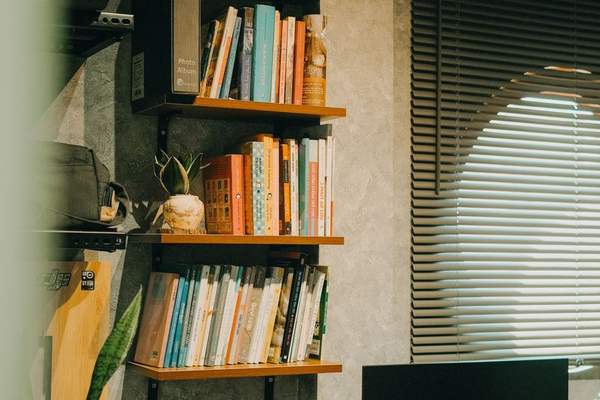
Open shelves make books easy to scan and grab. They also display every stack of paper and loose cable. Closed cabinets create a calmer backdrop for video calls and keep visual clutter out of sight, although doors need clearance and may slow access.
For many home offices, a mixed arrangement works best: open compartments for frequently used books, and closed sections or matching bins for spare chargers, notebooks, and stationery. Cube shelving suits baskets and smaller collections but can waste space around tall binders. A traditional office bookcase with adjustable horizontal shelves is usually more flexible for varied book heights.
Compare Materials, Load Limits, and Construction
Solid wood, plywood, metal, and engineered wood can all make useful office storage shelves. The best choice depends on construction quality and the load they are designed to carry. Thick-looking panels alone do not prove strength. Long shelves with inadequate support may sag under heavy books, regardless of their finish.
Read the manufacturer’s per-shelf weight limit, not just the total unit capacity. Consider how the shelves attach to the frame, whether a back panel adds rigidity, and if replacement parts or additional shelves are available. Metal frames can suit heavy-duty storage, while well-built wood or engineered-wood designs may look more at home in a living-room office.
Make Stability Part of the Buying Decision
Even a bookshelf that feels solid can tip if pulled or climbed. Plan to secure freestanding bookcases to the wall with appropriate anti-tip hardware, following the manufacturer’s instructions and using fasteners suitable for the wall. This is especially important where children may visit. The US Consumer Product Safety Commission recommends anchoring furniture such as bookcases.
Put heavier books and equipment on lower shelves and lighter display objects above. Do not assume a shelf is suitable for a printer simply because the printer fits; verify its weight rating, ventilation requirements, and cable access. Wall-mounted home office shelving needs supports and wall fixings rated for the intended load.
Picture a Real Working Day Before You Buy
Suppose you have a small desk, twelve reference books, six binders, a box of printer paper, and several charging accessories. A narrow tower with five equally spaced shelves might look neat online, but could be frustrating if the binders do not fit upright and the accessories spill across the desk.
A wider bookcase with adjustable shelves may work better: binders at standing reach, reference books nearby, paper on a low shelf, and cables in two labeled boxes. Reserve one partly empty shelf for future projects. You are buying usable capacity, not a photograph of perfectly styled shelves. Small home office storage ideas can help you decide whether one bookcase can replace several mismatched organizers.
What to Check Before Checkout
Compare the overall measurements with your floor plan and the internal dimensions with your largest items. Verify shelf load ratings, adjustability, wall-anchoring requirements, delivery access, assembly steps, and return conditions. A bargain bookshelf can become expensive if shipping is high or returns are difficult after assembly.
Think about how the finish fits your desk and lighting. Matching every surface is unnecessary, but repeating a material or color can make a working corner feel intentional. Office furniture layout tips can also help you allow enough chair clearance.
Frequently Asked Questions
How deep should a home office bookshelf be?
Choose depth based on your largest books, binders, or containers, and check usable interior depth rather than the exterior measurement. Shallow shelves are efficient for ordinary books; oversized files and baskets may need deeper compartments.
Is a tall or short office bookcase better?
Tall bookcases make better use of vertical space, while shorter ones keep more storage within easy reach. The right choice depends on ceiling height, accessibility, available wall space, and whether you can anchor the unit appropriately.
Are adjustable shelves worth paying extra for?
Usually, yes, if your storage includes mixed-size books, binders, and supplies. Adjustable shelves allow you to change compartment heights as work needs evolve, so less space is wasted.
Should office bookshelves have doors?
Doors help hide paper supplies and create a tidy background, but open shelves are faster for frequently used materials. A combination of open and closed storage often delivers the best balance.
Bring Your Office Storage Together
The best home office bookshelf is the one that makes your routine easier. Measure real objects, prioritize adjustable and load-rated shelves, plan safe installation, and choose a layout that keeps everyday items accessible. When the bookcase supports your workflow instead of competing for space, the whole office feels more considered.