Two bedroom storage pieces can hold similar amounts of clothing yet feel completely different once they are in your room. A dresser spreads storage across a wider, lower shape; a chest of drawers typically stacks it upward. That distinction affects floor space, access to your clothes, and whether you have room for a mirror or other everyday essentials.
When comparing a dresser vs chest of drawers, start with your bedroom layout and the clothing you need to put away. The furniture label is less important than the dimensions, drawer arrangement, and way you use the space.
Dresser vs Chest of Drawers: The Main Difference
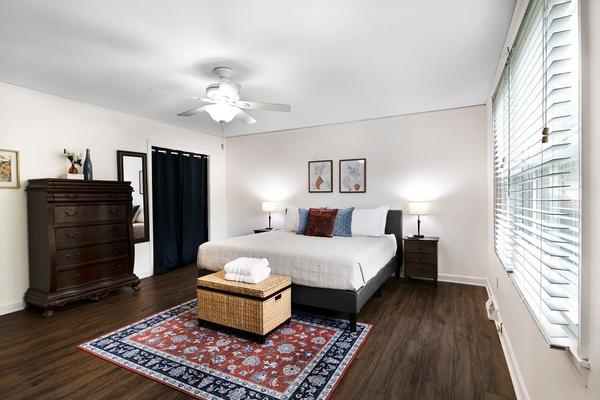
A typical dresser is wide and relatively low, often with drawers arranged in two or more columns. Its broad top can accommodate a mirror, lamp, or jewelry tray. A chest of drawers is generally narrower and taller, with drawers stacked vertically, making it useful when available wall width is limited.
These are conventions, not strict design rules. Retailers sometimes use the names interchangeably, and a model called a dresser may be shaped like a chest. Compare measurements rather than relying on product categories.
How Size and Shape Affect Your Floor Plan
Width versus height
A dresser works well along a long empty wall and can visually balance a large bed. But it may crowd a closet entrance or occupy space you wanted for a chair. A chest uses more wall height and less wall width, so it can fit beside a wardrobe or in a compact bedroom.
Measure usable wall width, allowing for door swings, baseboards, and outlets. Check height if the furniture will sit below a window, shelf, or television. Those measurements are more useful than assuming every chest is small or every dresser is large.
Depth and drawer clearance
Neither design is necessarily shallower. A chest can project just as far from the wall as a dresser. Check the listed depth, then make sure a drawer can open fully while you stand in front of it. Furniture that technically fits can still make the room difficult to move through.
Which Piece Offers More Storage?
There is no automatic winner for capacity. A wide six-drawer dresser may hold more than a narrow five-drawer chest, but a deep chest can exceed a slim dresser. Total drawer volume depends on usable interior dimensions, not the number of drawer fronts.
Dressers often provide broad drawers for folded shirts, jeans, and sleepwear, sometimes with smaller compartments for socks and accessories. Chests frequently offer a vertical series of drawers that makes separating clothing categories straightforward. Both can work for an organized wardrobe.
Before buying, picture your actual laundry piles. Bulky sweaters need sufficient drawer depth and height. Socks and smaller items benefit from divided compartments. You may find that a chest with fewer, deeper drawers is better than a dresser with many shallow ones, or the reverse.
Mirrors and Everyday Surface Space
The wide top is one of a dresser’s most useful features. It can serve as a getting-ready station with a wall mirror, small tray, and lamp. Some models come with matching mirrors, but a dresser does not need one to qualify as a dresser.
A chest’s top is typically smaller and higher, making it less convenient for a daily grooming routine. It can still hold decor or a small storage box. If you need accessible surface space as much as drawer storage, a dresser usually has the advantage.
A Practical Bedroom Comparison
Imagine having 62 inches of free wall between a closet door and a bedroom corner. A 60-inch dresser might fit on paper, but the tight margins could make that part of the room feel cramped. A narrower chest would leave room for a laundry hamper or simply create a more comfortable gap.
Now imagine an eight-foot wall opposite the bed. A low, wide dresser could anchor the space and offer an easy-to-reach surface. A tall chest might store everything you own but leave much of that wall unused. The better dresser vs chest choice changes with the room, even when the wardrobe stays the same.
Where a Tallboy Dresser Fits In
A tallboy dresser is generally a tall, narrow drawer unit. In use and appearance, it often resembles a chest of drawers more than a traditional wide dresser. The names overlap, so check width, height, and drawer layout before deciding.
Height also affects the room’s visual balance. A tall unit draws the eye upward; a low dresser creates a horizontal line. You do not need a matching bedroom set, but proportions should feel intentional beside your bed and nightstands.
What to Check Before You Buy
Start with an accurate floor plan, then review the product’s exterior measurements and interior drawer dimensions if available. Consider the space needed to open drawers, the location of electrical outlets, and how the piece will pass through hallways and doorways during delivery.
Look for sturdy construction and drawers that glide smoothly. When shopping in person, open each drawer and check how it feels. When shopping online, examine close-up photos, assembly details, and specifications instead of judging capacity from a styled room image.
Plan how you will organize clothes, too. Bedroom clothing organization ideas, small bedroom layout ideas, and ways to coordinate bedroom furniture can help you make the most of your chosen piece without overcrowding the room.
Safety Matters With Both Designs
Both types of bedroom storage furniture can pose tip-over risks. Secure the unit to the wall using suitable hardware and the manufacturer’s instructions. The U.S. Consumer Product Safety Commission recommends anchoring dressers and similar furniture, especially where children may be present.
Store heavier belongings in lower drawers, discourage climbing, and keep toys off the top. A taller chest is not automatically unsafe, and a wider dresser is not automatically tip-proof. Both deserve the same attention to stability.
Frequently Asked Questions
Is a dresser the same as a chest of drawers?
Both store clothing in drawers, but a dresser is commonly wider and lower while a chest is taller and narrower. Retailers do not always follow those distinctions.
Which is better for a small bedroom?
A chest often saves wall width. Still, a shallow dresser may fit better than a deep chest, so compare exact measurements and allow space for open drawers.
Does a dresser have to include a mirror?
No. Many dressers are sold without mirrors. Their broad top simply makes them convenient for adding one.
Can a tallboy replace a chest of drawers?
Usually. Tallboys are typically tall, narrow drawer units, but interior capacity varies. Check the drawer sizes and overall height.
Choosing the Right Bedroom Storage
Choose a dresser if you have a long wall, want a generous surface for daily essentials, or prefer broad drawers. Choose a chest of drawers if wall width is scarce or you like clothing separated into a vertical stack of compartments.
Ultimately, the best bedroom storage furniture is the piece that fits with its drawers open, holds your wardrobe comfortably, and suits your routine. Measure first and the dresser vs chest decision becomes much easier.