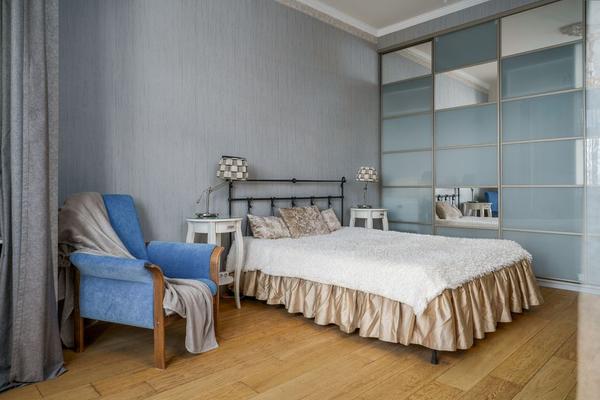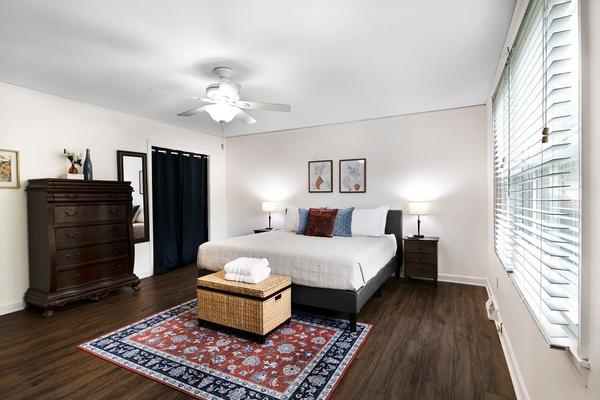
A nightstand can look perfectly sized in a showroom and still feel wrong beside your bed. Maybe its top sits too low for a glass of water, the drawers hit the bed frame, or its generous depth steals the path to the closet. A useful nightstand size guide considers all three dimensions, the scale of the bed, and the space people walk through.
As a starting point, many standard nightstands are about 23–28 inches high, 21–28 inches wide, and 16–20 inches deep. Those are common retail ranges, not fixed rules. Your mattress height, bedside habits, and available floor area determine the better fit.
Start With the Height of Your Mattress
Measure from the floor to the top of the mattress, with the bed made as you normally use it. Do not measure only the frame or box spring. For easy reach, aim for a nightstand top approximately level with the mattress, usually within an inch or two above or below it.
A 26-inch-high mattress, for example, often pairs comfortably with a table around 25–28 inches high. Someone who reads in bed might prefer the surface slightly higher, while a low platform bed may need a shorter piece. Test the reach from your sleeping position rather than assuming a catalog’s “standard height” suits everyone.
A tall upholstered headboard can visually overpower a tiny table even when its height is ergonomically correct. Solve that styling issue through nightstand width, lamp scale, or wall lighting—not by choosing an awkward tabletop height.
Choose Nightstand Width Based on Bed Scale
Nightstand width affects both the appearance of the bed wall and how much space you have for a lamp, phone, book, or water. Wider beds can support more substantial bedside furniture, but available wall space matters more than a rigid proportion formula.
Twin and Full Beds
For a twin bed, a compact nightstand around 14–20 inches wide often works, especially in a child’s room or guest bedroom. A full bed can usually accommodate 18–24 inches. In a narrow space, a slim open-sided table may feel lighter than a boxy drawer unit.
Queen Beds
With a queen bed, widths around 20–28 inches provide a practical starting point. A 24-inch-wide piece offers room for everyday essentials without demanding an oversized room. Matching bedside tables create symmetry, but they need not be identical when doors or dressers make the sides unequal.
King and California King Beds
King-size beds can support wider nightstands, often around 24–32 inches, if the room allows. A larger piece may balance a substantial headboard and provide extra storage. But a pair of 30-inch tables can overwhelm a modest bedroom. Protect the walkway before chasing perfect proportions.
Nightstand Depth: The Overlooked Measurement
Nightstand depth is the distance from front to back. Many conventional designs are about 16–20 inches deep, while slim options can be 12–15 inches. A deeper top holds a larger lamp or tray, but it can also intrude on the path between your bed and other furniture.
Check your bed frame’s depth too. If the table projects well beyond the bed’s front edge or crowds the bedroom entry, you’ll notice it every time you pass. A shallow table with a wall sconce may solve the problem more elegantly than a standard-depth unit.
For drawer models, confirm usable interior depth rather than relying on exterior nightstand dimensions. Drawer walls, runners, and back panels reduce storage space. Measure your largest bedside item and check the product’s internal specifications where available.
Measure Clearance Before You Shop
Treat the nightstand as part of the bedroom’s traffic pattern. Measure between the outside edge of the bed and the wall or adjacent furniture, then subtract the nightstand width. The remainder is your available passage.
Roughly 24 inches of clear passage can work in a tight bedroom; 30 inches or more generally feels easier for a frequently used route. These are comfort guidelines, not universal building-code requirements. Door swings, accessibility needs, and the room’s shape may demand more.
Leave a small gap between nightstand and mattress so bedding doesn’t catch. Open every drawer in your planned layout. A table that technically fits may be frustrating if a drawer strikes the bed rail or a nearby chair.
A Real-World Bedside Sizing Example
Imagine a queen bed with its mattress top 27 inches above the floor. You have 51 inches between the bed and a wardrobe and need a clear route to the door. A 24-inch-wide nightstand leaves 27 inches beside it; a 30-inch version leaves only 21 inches. The narrower choice makes daily movement easier.
Now consider depth. If the wardrobe door swings toward the bed, a 16-inch-deep model may avoid interference that a 20-inch-deep one would cause. Choose a height close to 27 inches and mark the intended footprint and drawer-open position with painter’s tape. This simple test can prevent a costly mismatch.
Match Storage to the Footprint
A small bedside table size doesn’t automatically mean poor storage. One good drawer can hold charging cords, glasses, and medication, while an open shelf accommodates books. If you need several deep drawers, expect a larger footprint and ask whether the extra storage justifies less floor space.
Lighting changes the calculation too. A table lamp needs a stable surface large enough for its base. A wall-mounted reading light frees up the top, making a narrow table more practical. A bedroom furniture layout guide, small bedroom storage ideas, and a bedside lighting guide can help you plan the wider room around that choice.
Frequently Asked Questions
Should a nightstand be higher or lower than the bed?
Ideally, the top sits close to mattress height. A difference of an inch or two is usually manageable, but comfort depends on your reach and sleeping position.
What is a good nightstand width for a queen bed?
About 20–28 inches is a useful shopping range. Choose based on headboard scale, storage needs, and the free space beside your bed.
How deep should a bedside table be?
About 16–20 inches works for many bedrooms. Explore 12–15-inch slim models when circulation is tight, and check that your lamp and essentials will fit.
Do both nightstands need to match?
No. Similar heights and compatible finishes can look cohesive even if one table is narrower to accommodate a doorway or tighter walkway.
Choose the Size That Works in Your Room
Use typical measurements to narrow the options, then trust your own room. Match height to the mattress, balance width against bed scale and circulation, and choose depth for storage without blocking movement. Tape out the footprint and test drawer clearance. Those details matter much more than a label claiming a nightstand is “standard.”